
Learning with AI: A Student’s Perspective on What Actually Helps
In this post, I reflect on Sal Khan’s TED Talk about AI in education and share my own thoughts as a student. From personalized learning to the irreplaceable role of teachers, I explore how AI could truly support—not replace—education if we use it the right way.
Ishaan Tripathi
6/13/20252 min read
Check out Sal's talk!
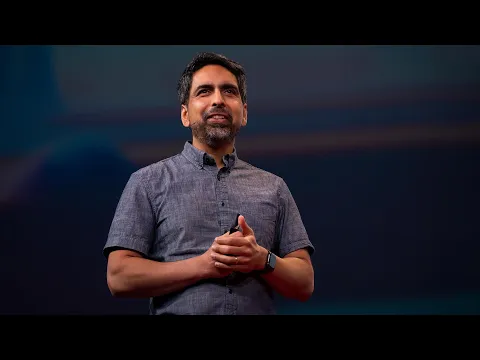
How AI Can Actually Save Education, My Take on Sal Khan’s TED Talk
When I first watched Sal Khan’s TED Talk “How AI Could Save (Not Destroy) Education,” I didn’t expect to walk away this energized. The ideas he shares aren’t just about using AI in schools—they’re about reimagining how learning happens, and more importantly, who it’s for. Here's what stood out to me the most and why I think this vision matters.
Personalized Feedback Is a Game Changer
In big classrooms, everyone learns at a different pace. Some people get stuck early, others later—but either way, teachers often can’t stop to help one person without leaving the rest behind. What if an AI tutor could quietly step in, give personalized support, and let the teacher focus on mentoring?
I believe this kind of real-time, tailored feedback could completely change the game for struggling students—especially the ones who don’t feel comfortable asking for help out loud. It’s like having a tutor that never gets tired and always knows what you’re missing, but doesn’t embarrass you in front of the class.
But Let’s Not Replace Human Teachers
AI might be able to teach, but it can’t replace the role of a mentor. Teachers noticing how students feel, cheering them on, or helping when motivation drops—that’s something technology just can’t replicate.
If anything, AI should free up teachers to focus more on building those personal connections. And yes, that would take some retraining, since most teachers today are trained to lecture, not coach. But I’ve had teachers who did both—and those are the ones who made a lasting impact.
Step-by-Step Guidance > Quick Answers
One part that hit close to home was how AI can guide you instead of just giving you the answer. In math, for example, most of the concepts are already familiar—it’s the application that gets tricky. A worked-out solution or video might help, but what I really benefit from is a step-by-step breakdown that adapts to what I’m doing wrong.
That’s where AI shines. If it can spot where I’m going off track and give me a nudge in the right direction—without solving it for me—that’s the sweet spot.
Human Connection Will Mean More Than Ever
Funny enough, the more we lean on AI for learning, the more we’ll value the moments of real, human connection. I think students will start to see teacher check-ins not as interruptions, but as opportunities—to talk, reflect, and grow.
But to make this work, honesty between teachers and students becomes essential. AI can show patterns in performance, but not intent. If I’m experimenting with a new method and it’s not working yet, I’d want the teacher to know why before stepping in. That only happens when trust is part of the classroom.
So, What’s the Ideal Future Classroom?
If I had to design one thing that must exist in every AI-powered classroom, it wouldn’t be a fancy tool. It’d be a human. A real, present adult who listens, mentors, and cares. AI might be able to teach efficiently, but only humans can understand us on the level that really counts.
This talk reminded me that AI isn’t here to replace education—it’s here to redefine how it works for every student. And if we get it right, we’ll finally be able to learn at our own pace, in our own way, with the support of teachers who actually have time to focus on us as individuals.