
Is Genuine Artificial Intelligence Achievable?
What does it mean for artificial intelligence to be genuine? This post explores the difference between mimicking intelligence and truly understanding, examining the Turing Test, John Searle’s Chinese Room argument, and why experience may be the missing link.
Ishaan Tripathi
7/24/20252 min read
What Is Genuine AI?
When we talk about intelligence in machines, we usually mean their ability to store information and use it to solve problems, set goals, and take steps to reach them. But is that enough? Genuine artificial intelligence would require machines not only to perform tasks but to understand the meaning behind what they say or do. Today’s AI systems, especially large language models, can generate human‑like responses, but they lack true comprehension.
The Turing Test: A Measure of Imitation
Alan Turing proposed a practical alternative to the question "Can machines think?" in the form of the Turing Test. In this setup, a human judge communicates by text with a hidden human and a hidden machine. If the judge cannot reliably distinguish between the two (failing to identify the human more than half the time), the machine is said to have passed.
Turing’s idea was simple but powerful: if a machine can mimic human conversation well enough, maybe it is thinking. This shift in focus from internal states to observable behavior launched AI research in a pragmatic direction. Yet, passing the Turing Test only proves a machine’s skill at imitation, not its grasp of meaning.
Searle’s Chinese Room: Why Mimicry Isn’t Enough
Philosopher John Searle devised the Chinese Room thought experiment to challenge the idea that symbol manipulation equals understanding. Imagine a person inside a room who follows a rulebook to translate Chinese input into Chinese output, without understanding a word of Chinese. From the outside, their answers appear fluent, but inside, it’s pure symbol‑shuffling.
Searle argues that, like the person in the room, a computer may perfectly simulate conversation without ever knowing what it’s saying. Even if the entire system, the room, the rulebook, and the operator work flawlessly, there’s no genuine comprehension. This distinction between syntax (form) and semantics (meaning) underlines why today’s AI remains fundamentally different from human minds.
My Perspective: Experience as the Bridge to Understanding
I believe genuine AI is still within reach, but only if we give machines experience, not just data. Right now, AI learns by spotting patterns: image classifiers distinguish dogs from cats based on millions of labeled photos, not by actually seeing, hearing, or smelling them. Humans, by contrast, can learn with just a few examples enriched by multisensory experience.
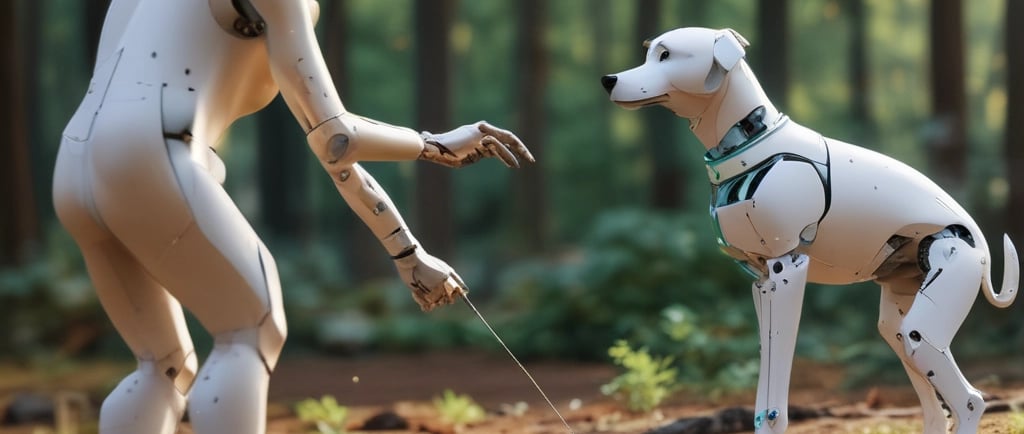
If we could let AI live through sensory experiences (hear a dog bark, feel its fur, watch it play), they might form an internal concept of a dog rather than just statistical patterns. In that case, machines could move beyond empty mimicry and toward real understanding.
This is just my take on a deeply complex question, and there’s no definitive answer yet. What do you think?